
John Hart spent a good chunk of his 28-year career as a general manager and team president on the phone talking to other Major League Baseball executives. It was important, but sometimes monotonous work. Surprises were rare. Conversations followed predictable patterns.
It’s why Hart thoroughly enjoyed interactions with decision-makers from the other pro sports franchises in his market. He was interested to hear about their team-building philosophies and problem-solving approaches and whether any could apply to baseball.
Some of Hart’s most memorable chats involved the curiosity other executives found in the MLB Draft. When Hart was in Cleveland, leading the Indians to two World Series appearances in the 1990s, he remembers the NBA Cavaliers’ general manager, Wayne Embry, marveling at the unwieldy nature of baseball’s player-selection process.
“Wayne came up to me and said, ‘Let me get this right: You draft like 70 rounds, you have 26 scouts, you're drafting high school and college kids ... ” Hart recalled. “He’s like, ‘I've got two scouts and we draft like two rounds. That’s a piece of cake.’ The basketball and football players are known commodities, there are combines, you have every test known to man at your disposal. Wayne is right. When you're deciding between a college arm with a known pedigree and a high school shortstop, that’s a big gap. That’s not an easy decision, especially when you're near the top of the draft board.”
Welcome to Ben Cherington’s world this weekend.
The Pirates have been sitting on the No. 1 overall pick for more than eight months, and Sunday night, they must finally decide how to use it. The general manager has given no hint as to what player the franchise will take. Some mock drafts have the Pirates choosing high school shortstop Marcelo Mayer of San Diego. Three other prep shortstops, Jordan Lawlar of Dallas, Kahlil Watson of Wake Forest, N.C., and Brady House of Winder, Ga., also are possibilities. From the college ranks, there are Vanderbilt University pitchers Jack Leiter and Kumar Rocker and University of Louisville catcher Henry Davis.
“They've kept their cards close to the vest, while you have a better sense of what some of the other teams want to do,” said Burke Granger, a draft analyst for 2080 Baseball.
You don’t need to know the difference between a slider and 12-6 curve to understand there’s no consensus No. 1 pick here. No Stephen Strasburg, Bryce Harper, Adley Rutschman or Spencer Torkelson as a reward for a painful 2020. Some thought Rocker had the potential to be such a headliner, but instead of distancing himself from the pack, he fell back into it.
“This isn’t going to be easy,” one American League talent evaluator told DK Pittsburgh Sports. “There’s a lot of options and there’s inherent pressure drafting 1:1. And this is a year where a lot of their fans were able to watch Leiter and Rocker pitch (on ESPN), and they heard all the hype. Going and getting one of those high school shortstops might be the right play, but some fans will feel let down, especially if (the Vanderbilt pitchers) have early success while their prospect is still working his way through the minors.”
Casual Pirates fans rarely follow the buildup to a baseball draft. There’s no Mel Kiper and Todd McShay filling national TV airwaves and driving public opinion. And there’s no international equivalent to an Alex Ovechkin or Evgeni Malkin available Sunday night. The international signing period doesn’t begin again until Jan. 2.
But with the Pirates selecting No. 1 overall for the first time in a decade, promising prospects already in the pipeline and the added visibility of Leiter and Rocker, there’s serious attention being paid to this year’s draft.
Industry insiders are quick to remind fans there are more variables and moving parts in baseball’s selection process than in other sports. Bonus pool money must be considered, and there’s plenty of precedent for spreading it around among early picks.
“You can’t just focus on the first pick,” Hart said. “There’s a lot of value in those other high draft picks and the smart teams are the ones who know how to distribute the money.”
Still, after months of listening to scouts’ takes on Leiter, Rocker and Davis, some might wonder how the Pirates and the teams directly behind them in the draft order are so smitten with high school players.
____________________
VANDERBILT ATHLETICS
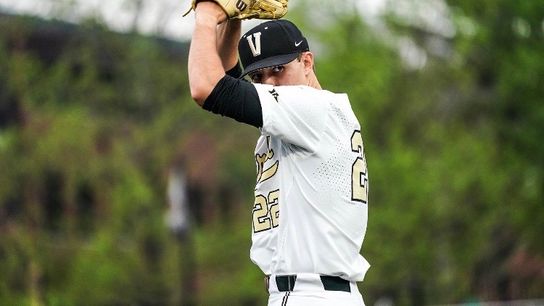
Jack Leiter.
The global pandemic delivered a hammer blow to many sporting events and created chaos with scheduling. At this time a year ago, we weren’t even sure there would be a college football season. The baseball draft, a more manageable 20 rounds these days, was reduced to five.
But organizers of prep baseball showcases — the ones allowing scouts to witness best-on-best competition — got creative. They moved events slated for hard-hit states that to other regions of the country.
High school players such as Mayer, Lawlar and Watson took full advantage, while college prospects saw their showcases, most notably the Cape Cod League, get cancelled.
“Most of what (high school players are) able to do in the 12 months leading up to the draft, they were able to do,” Cherington told our Alex Stumpf. “Maybe not everything, but most of the showcases still happened last summer. The stuff they’d be doing in the fall, workouts, interviews, that still happened.”
Prep players were going to get drafted regardless, but would someone in Cherington’s position risk a No. 1 pick on a senior that was evaluated primarily on performances against local competition?
Rocker and Leiter had their 2020 season at Vanderbilt halted just as it was beginning because of the COVID-19 threat. Leiter had never faced an SEC opponent before no-hitting South Carolina on March 20.
Both pitchers had a few rough outings over the course of the 2021 season, but they still led the Commodores within one win of a second consecutive College World Series title and became the first teammates to finish 1-2 in strikeouts in more than 30 years.
Leiter went 11-4 with a 2.13 ERA over 110 innings this year. He registered 179 strikeouts, 45 walks and an 0.845 WHIP. In his last three appearances, spanning the Super Regionals and College World Series, Leiter fanned 33 hits in 21 innings, allowing four earned runs. He missed one start during the season, and it’s unclear whether it was due to injury or the coaching staff’s decision to rest him.
Rocker posted a 14-4 record with a 2.73 ERA in 122 innings. He struck out 179 batters and walked 39 with an 0.934 WHIP. The 6-foot-5, 245-pound flame-thrower saw his velocity dip at midseason, producing a handful of bad starts. There remains questions about his consistency and command.
But Jonathan Mayo, a Pittsburgh-based draft and minor-league analyst for MLB.com, believes the story is more about the rise of the high school prospects than the fall of the Vanderbilt pitchers.
“I don’t think Jack Leiter has played his way out of anything," Mayo said. "He's still in the conversation and, even if (the Pirates) don’t take him it’s not because of anything he didn’t do. It’s the same with Rocker.”
Hart said he would be “overjoyed” if he were a general manager drafting outside the top three and one of Vanderbilt pitchers fell to his organization. The former Indians and Rangers general manager saw Leiter pitch extensively this season. Leiter (6-foot-1, 205 pounds) doesn’t possess the big frame or overpowering velocity associated with some major-league aces, but Hart believes he’s “at worst a middle-of-the-rotation guy who would start postseason games.”
“He’s got command and control,” Hart said. “He can locate. He’s got great intangibles. He’s probably the safest of the college pitchers and he still has an upside. ... There’s no doubt Leiter is on the top five of everybody’s board. There’s nothing not to like about him. He doesn’t have any warts.”
Glowing testimonial aside, Hart isn’t lobbying for the Pirates to take Leiter.
“My advice to Ben Cherington is don’t get tricky,” he said. “Pick the guy you love and that you think makes the most sense for your organization. ... But if you're going to take one of those shortstops, you'd better love him, not just like him.”
____________________
DALLAS MORNING NEWS
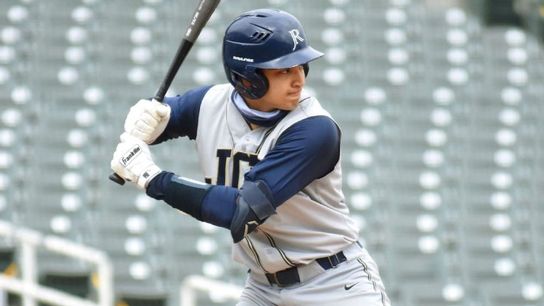
Jordan Lawlar.
Great pitching wins titles. Terrific staffs enable organizations to make deep runs into October. The road to raising banners, however, seldom begins with taking a pitcher No. 1 overall.
Since the draft began in 1965, pitchers have been the top choice just 19 times, including 2011 when the Pirates selected Gerrit Cole. That’s still more than any other position, but some franchises want their cornerstone selection to be in the lineup more than 35 times a season.
“There’s always an appeal when you are picking near the top of the draft to take a player who will be in the lineup every day and not every sixth day,” Granger said. “That plays into it a little bit. And, along those lines, there’s not a premier every-day college position player probably worthy of No. 1 overall this year.”
As a general rule, Hart doesn’t see as much delineation between a quality high school position player and a college position player. That’s not the case when it comes to pitching.
“With high school pitching there’s always risk when you are drafting high, there just is,” Hart said. “These guys are still growing into their bodies, still developing.”
Perhaps all of it helps explain why so many arrows are pointing to prep shortstops.
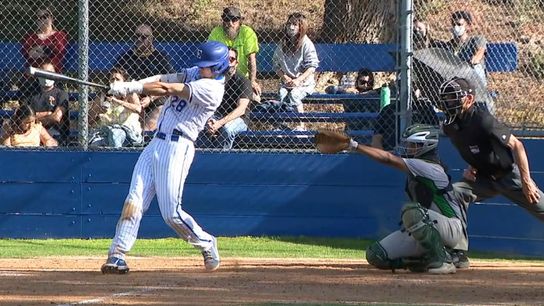
The 6-foot-3 Mayer, who's been compared offensively to Corey Seager (Dodgers) and defensively to Brandon Crawford (Giants), hit .410 with 13 home runs in his senior season.
“There’s not a huge separation, and he hasn’t run away and hid, but he’s the best player,” Mayo said of Mayer. “A lot of it has to do with the certainty that he’s going to hit. We have him graded out not only as our best hitter, but also our best defender.”
Mayer can hit for power and average, Granger said, and unlike some prep prospects “he has the defensive chops to stay at shortstop.” The only knock against him, Granger added, is his lack of speed, which means he won’t steal many bases.
“If you are drafting a high school position player, the bat has to pop,” Hart said. “Defensive play is important but, at the end of the day, there has to be no questions about his hitting or you don’t take him at the top of first round.”
While the former executive appreciates the importance of analytics, he believes organizations that rely too heavily on them in the draft are courting trouble. Hart said intangibles play a major part in the evaluation process, and that savvy scouts are the ones who can provide context.
How does a player deal with slumps? How does he react to criticism or adversity during a game?
“It’s a game played around failure and some guys can’t take it and, for whatever reason, all their talent doesn’t come through because their intangibles aren’t there,” Hart said. “That’s something that’s hard to quantify.”
Lawlar, the 6-foot-2 shortstop from Dallas, began his recent high school season with a rash of strikeouts. He uncharacteristically fanned 16 times in his first 21 games. Was he pressing? Was it draft-induced nerves? His high school coach attributed the problem to having to readjust to pitchers throwing in the 80s in league play after seeing fastballs in the mid-90s from some of the nation's top prospects in showcases.
Whatever the case, Lawlar rebounded to hit .425 and steal 32 bases. He struck out only once in his final 15 games. Lawlar is solid in the field and he’s always hit for average. He’s drawn comparisons to Bobby Witt Jr., the Royals' No. 2 overall choice in 2019. The Rangers, who own the second pick this year, probably would love to keep the high-end local prospect at home, but Cherington and Pirates will get the first shot.
Lawlar turns 19 next week.
“He may have a higher ceiling (than Mayer),” Mayo said. “He is faster and more of a quick-twitch athlete.”
The 5-foot-9 Watson lacks the size of Mayer and Lawlar, but he hits for power and possesses impressive bat speed. Scouts got a longer look at Watson as the North Carolina prep season started later than many others around the country.
There’s some debate whether Watson’s swing-for-the-fences mentality will prove detrimental against more refined pitching, but few think the speedster will drop out of the top half of the first round.
“Lots of people got to see him and, to his credit, he performed really well,” Mayo said.
Only once in the history of the MLB draft have four shortstops gone off the board within the top-10 picks. House could complete the set. According to an MLB.com video report, he entered the draft cycle as the top-rated prep player, but struggled at times in the showcases, getting “excessively aggressive” at the plate, which slowed his bat speed and reflected in his number of strikeouts.
While the 6-foot-4 House made adjustments in the spring, his lack of quickness might necessitate a move to third base.
Heading into Sunday’s draft, the 18-year-old, who’s been likened to Joey Gallo (Rangers), appears to be the fourth option in a shortstop-rich prep class.
“The top three guys at the position really separated themselves (last) summer,” Granger said.
____________________
SAN DIEGO UNION-TRIBUNE
Marcelo Mayer.
One name and one organization’s draft class kept popping up in conversations regarding how the Pirates might approach a first round lacking a consensus No. 1 pick.
In 2012, the Astros surprised many by selecting shortstop Carlos Correa first overall. He was generally regarded as a No. 5 or No. 6 option, but after a private workout the organization was convinced he was the one.
The Astros spent just $4.6 million of their bonus pool money on Correa — by comparison the second pick, outfielder Byron Buxton, received $6 million from the Twins. The Astros used the savings to entice prep pitching prospect Lance McCullers into to signing for $2.5 million, which was well above the slotted amount for the No. 41 overall pick nine years ago.
McCullers was awarded more bonus cash than the Mets’ first rounder, who went at No. 12.
Correa blossomed into the 2015 American League Rookie of the Year, and is a two-time All-Star. McCullers also has earned All-Star honors, and boasts a 6-1 record this season. Both players were members of the Astros’ title team in 2017.
“It turned out to be a great move for them,” Hart said. “Teams cut deals all the time to deepen their draft, and that’s one of the best examples of it really paying off.”
The Pirates have the most draft pool money of any team at $14,394 million and they own the first selection in each round, as well as a supplemental second rounder. The No. 1 overall slot value is $8.4 million and their next pick, No. 37, is slotted at a shade under $2 million.
Everyone interviewed for this story said they could see the Pirates trying to sign their first pick under value to offer more money to their other high selections. Sometimes, the sweetener is enough for a prospect to sign a contract and forgo the college scholarship offers.
Since the draft pool era opened in 2012, only the Tigers paid full slot value at No. 1 for Torkelson, a third baseman, last year.
“If all things are equal, and I don’t know if they are, and you can save a little money by taking Mayer, then you take Mayer, who by the way has the top ranking,” Mayo said. “ . . . Maybe he signs for $7 million — I’m just picking a number out of my head — so that’s about $1.5 million (the Pirates) save and they can go aggressive in second and third round because they have the biggest pot.”
Granger said if the Pirates believe Watson is on the level of a Mayer and Lawlar, they could bank even more cash to splash elsewhere. Another option is Davis, the hard-hitting catcher from Louisville. Mayo, however, believes his defensive deficiencies, despite a strong arm, might be too much of a risk at No. 1.
The draft analyst is well aware of the Pirates’ notoriously thrifty reputation, but Mayo said such criticism is unwarranted when it comes to draft pool bonus money.
“If you have issues about ownership not keeping players, that’s a different conversation,” he said. “But a long time ago, even before this latest draft era with the bonus pools, they decided money spent in the draft was money well spent because you are on a level playing field . . . They are not going to have money left in the bank, I guarantee you.”
So how does Cherington play it? Will it be Mayer or one of the other high school shortstops? Or, does the general manager select one of the Vandy Boys, who pitch in the nation’s best conference and for a school with a track record of producing studs such as David Price, Walker Buehler and Sonny Gray?
“I don’t feel like it’s more pressure,” Cherington told reporters Wednesday. “The draft is gonna be critical for the Pirates every year, no matter how high we’re picking. We all feel pressure every year to get it right, but that’s an opportunity, too. It doesn’t feel like it’s a burden at all.”
Cherington got his start in the Indians’ organization under Hart as an advance scout. The former executive believes the Pirates’ future is in “good hands” with Cherington. Hart also knows a GM can’t afford to be picking No. 1 too many times.
The first overall selection might not feel like a burden, but it sure would be nice if the choice was more clear cut.
“Ben has a lot of options there,” Hart said.