Throw away the key, gentlemen.
There's one golden opportunity at hand with the Major League Baseball lockout that's now one glorious day old, and it'll be just as critical when it's a month old, a year old, even longer. And that's to restore fairness to this grand game that once graced our entire national landscape but now panders to a few of the most populated cities and takes a figurative leak on the rest of us.
Salary.
Cap.
Or.
Bust.
No, it's not that simple. It never is.
And no, it's not about taking sides because of personalities or backgrounds. This isn't a reality TV show. It's a pivoting point in the history of our former preeminent pastime.
And no, it sure as hell isn't about Bob Nutting.
Rather, it's about saving a sport that's so blind to anything occurring outside New York, Los Angeles and a couple other metros that it doesn't grasp the magnitude of what's already been lost. The plummeting attendance and ratings. The empty sandlots. The other sports that've surpassed it in prominence, in cool factor. The fact that Mike Trout and Shohei Ohtani could stroll through Market Square, in full uniform and in the lunch hour, and barely be recognized.
Proof?
Exhibit A: In 2019, the final full year before the pandemic, per research by my friend Mike DeCourcy at The Sporting News, NHL attendance hit an all-time high at 22.2 million, the NBA did likewise at 21.5 million, and Major League Soccer did likewise at 8.6 million ... while baseball dropped 13.8% from its all-time high in 2007.
That's not a Pittsburgh problem. That's an American problem.
Allow me, please, to offer a rapid-fire 21-point primer on this whole scenario, one that'll fly in the face of a few widespread misconceptions:
1. Baseball's the only sport left without a salary cap system or anything close. It's the wild, wild west in nearly every way. There's a luxury tax on teams with payrolls over $220 million, but that's barely been a deterrent and, at the other extreme, there's been nothing to enforce a minimum.
2. As a result, the Dodgers spent $271 million, while 12 of the other 29 teams spent less than $100 million, and four of those -- Marlins ($58.2 million), Indians ($50.2 million), Pirates ($50.2 million), Orioles ($44.2 million) -- spent less than $60 million. The Dodgers spent $70 million more than any other team, and yet the Yankees ($205.7 million) and Mets ($201.1 million) still spent quadruple that of the bottom three teams.
In stark contrast, the top-and-bottom ranges in the NFL, NHL and NBA are all around $30 million.
3. A salary cap system, for anyone who's new to my stuff, invariably comes with a ceiling, a floor and expanded revenue sharing. It's never, ever, ever just a ceiling. It's never, ever, ever just a floor. And it wouldn't work without the expanded revenue sharing that allows the lower-revenue teams to spend up into the designated range. (Clip and save this paragraph!)
4. Baseball already shares revenues on national broadcasting, merchandise and web-based ventures, and it does so evenly across all 30 teams. When a fan buys an MLB.tv package or a Bryan Reynolds jersey, the same 1/30 of that money goes to the Dodgers as it does to the Pirates. Same in the NFL, NHL and NBA.
5. The separator in baseball is local TV revenue, and it's a colossal separator.
In 2013, the Dodgers and Time Warner Cable signed a borderline unbelievable 25-year, $8.35 billion -- that's with a B -- contract for Los Angeles TV rights. That pays the Dodgers $239 million per year, enough to cover almost all of their payroll. (Add to that $185 million in gate receipts at Dodger Stadium, plus multiple other revenue streams, and they are extraordinarily profitable.) The next-biggest annual local TV take is the $138 million of the Angels, more than $100 million lower.
The Pirates' local TV contract with AT&T SportsNet, signed in 2019, hasn't been made public. But my information's always been that it brings roughly $44 million annually to the team. That's believed to be in the bottom handful of the majors.
6. Another separator that's little known: The Pirates collect exactly $0 in parking revenue at PNC Park, one of the few teams in the majors in that category. The only parking the team owns is a small private garage under the stadium that's used by the players and coaches. All else on the North Shore is independently owned.
The Dodgers own every chunk of asphalt around Chavez Ravine -- and there's nothing else there -- accounting for nearly $100 million in annual parking revenue. (I did mention they were extraordinarily profitable, right?)
7. A month ago, the most recent proposal made by Rob Manfred and the owners to the MLB Players Association called for a reduction of the luxury tax threshold to $180 million, as well as, for the first time, a salary floor of $100 million. The latter would be funded by the tax on the teams, including the Dodgers, exceeding the threshold. Tony Clark, the union's chief executive, dismissed the proposal out of hand, saying, "A system that restricts player pay based on revenues is a salary cap, period." Even though the proposal contained no hard ceiling.
8. No, that proposal isn't technically a cap system. As Manfred went out of his way to state yesterday, "We're the only league without a salary cap," and he did so sounding as if it'll stay that way. Which means nothing. Because that proposal's patterned in every way on a cap system. This is semantics.
9. The union's counter -- and I wish I was kidding -- was to reduce the current revenue sharing by $100 million. Meaning to share even less with the low-revenue teams. Presumably, the thinking being, if the Dodgers and Yankees keep that money, they'll spend even more. Which, obviously, ignores the enormous profit being made in Los Angeles.
But hey, send a snarly message to the little guys or something.
10. More than half of all teams in the majors have, over the past decade, adopted an approach that most describe as "tanking." Meaning they allow their payrolls to plunge to low levels, rebuild their roster by moving veterans for prospects, then push to win again once those prospects are in the majors and cost little more than the big-league minimum wage over their first three years.
The Pirates are doing it right now. The Cubs, Astros and Braves have done it in recent years on their way to World Series championships.
11. Three years ago in Bradenton, Fla., I asked Clark why the union, which had just filed a grievance against the Pirates and three other teams, wouldn't just agree to a salary floor. His response: "If you agree to a floor, you agree to a cap." That's been the standard union line on that subject for decades. They see the floor as a slippery slope.
12. That stance is held most vocally by super-agent Scott Boras, who currently has five clients on the MLBPA's eight-player executive board, one of whom is Gerrit Cole, who'd follow Boras off a cliff.
Boras last month derided the Braves' first championship since 1995 as "the Easter Bunny delivering rotten eggs," adding, "We have seen the championship in 60 days. The rules allow them to be a less-than-.500 team at Aug. 1 and add four or five players from teams that no longer wanted to compete and for very little cost change the entirety of their team and season. And we saw this unfold to the detriment of teams that create at vast expense, planning and intellect and won over 100 games."
That's how he sees this. The teams that pony up for his clients, like Max Scherzer just getting a $43 million annual salary from the Mets, are worthy winners. The rest are undeserving.
13. The Boras Corporation -- and that's what it's called -- employs an army of workers constantly staying in touch with reporters, most of them at non-local outlets, and feeding them information. Boras himself will even attempt to instruct reporters on what they should write. I'm speaking from firsthand experience.
14. There's a common thought that the bigger markets will oppose to a cap-type system. And maybe, in the end, they will. But to date, by all accounts the teams driving the process have been ... the Yankees and Red Sox?
Yeah, it was New York owner Hal Steinbrenner speaking up two weeks ago when he and the rest of the representative seven-team labor policy committee voted -- unanimously -- to approve the aforementioned proposal.
"It was a unanimous deal," he'd stress not once but twice upon emerging.
15. Oh, and get this: Of the $1.7 billion that teams invested into the massive free-agency wave in November, the Yankees put out ... $2 million. About a third of what the Pirates did.
Hm.
16. It's always been the biggest markets that've pushed these processes historically, by the way. Never underestimate how much the rich value getting even richer. No one hears Jerry Jones, Robert Kraft or Arthur Blank complaining about the NFL's cap.
17. Baseball writers, especially at non-local outlets, avoid the mere mention of a salary cap. It's a toxic term. And when called on that -- I'll do it myself occasionally, just to be annoying -- they'll change the subject.
18. Baseball writers, more than any other breed of sports journalist, pay little attention to other sports. Behold this beauty on Twitter yesterday from ESPN's Buster Olney:
This will be the first time that a major U.S. pro sports league went through a labor shutdown since the advent of high-impact social media. MLB, players will feel more direct backlash than '94-'95, and it'll be a challenge for union to keep a consistent message from all members.
— Buster Olney (@Buster_ESPN) December 2, 2021
Uh, no. The NFL had a lockout in 2011, the NHL had two in 2004 and 2012, and the NBA had one in 2011. But then, maybe only baseball counts as a major sport?
Because of this, they also know little to nothing about how a salary cap works, as I've encountered in direct conversation with a few. They think, as most do, that it's only a ceiling.
19. They also regularly cite this claptrap as evidence of parity:
Make it 21 years without a repeat champion 😱 pic.twitter.com/odNy904FCs
— MLB (@MLB) October 24, 2021
It's extrapolating the haphazard results of the final round of a playoff and nothing more.
The pertinent facts: The Yankees haven't had a losing season since 2000, averaging 94.1 wins per a full season, a span in which the Pirates, Reds, Brewers and Royals -- based in the four smallest actual markets -- don’t have 20 winning seasons combined. One out of that bottom four -- Royals in 2015 -- won the World Series. And only one team in that entire time — Marlins in 2003 — won a World Series without being in the upper half of the payroll rankings.
20. The likes of Scherzer make out big in this system, but one area of universal agreement, including within the union, is that explosive salaries like his come at the cost of baseball's so-called middle class. The highest-end wages have gone up, the middle's plunged, and the lowest has stayed about the same.
In the other three leagues, the owners and players split revenues on a virtual 50/50 basis. In baseball, the players' portion has shrunk from 56% two decades ago to 40% and diminishing through 2019. And that's because of the middle class: In 2014, the average salary of a mid-tier free agent was $11.8 million, per research by ESPN's Paul Hembekides. This past season, it was down to $6.2 million.
That's because, as revenues and revenue streams have expanded for owners, the players have continued to prefer the wild, wild west approach rather than the guarantee of a set percentage.
Know what achieves that?
Right. A salary cap system guarantees -- legally binding, independently audited each year -- that players in the NFL, NHL and NBA get their allotted share.
The MLBPA doesn't want that because ... principle? Boras? Ego?
21. Endless research has shown baseball players would be paid more in a cap system, as the players' percentage shows.
Some are starting to see that.
As veteran New York-based scribe Jesse Spector wrote three weeks ago, "A salary cap has long been anathema to the MLBPA. It's now the best way for the players to make sure they actually get the money they deserve, as owners open new revenue streams."
But then, there's also projectile vomit like this from another veteran New York-based scribe:
Just based on the replies I'm seeing, I wonder if contracting the Pirates would be the simplest solution to all this. No other team exploits the current rule set to the same extent, no other owner has so clearly refused to put money into his roster.
— Joe Sheehan (@joe_sheehan) December 2, 2021
Oh, man. Contract the franchise that was founded in 1882 and is older than either of those in New York. Maybe the Reds, too. They're only baseball's oldest professional franchise, born in 1869. Let's whack them, too, so the New Yorkers can exercise their God-given right to everyone else's assets.
Look, I could do this all day.
These players will be painted, almost everywhere, as union brothers. As if people paid in seven-figure and eight-figure salaries can somehow share ground with common folk and, you know, the real reason unions exist.
These owners will be painted as Mr. Burns-esque oligarchs, particularly by the non-local media. That's already happening. And I'm sure, in several cases, it'll be an accurate portrayal.
Around here, of course, Nutting will be painted as cheap and not worth supporting in any capacity. That'll be wholly accurate.
But again, this isn't about taking sides because of personalities or backgrounds. It can't be. This is way bigger than any simplistic storylines.
It's about restoring hope in all markets, and about the resonating benefits within that. More fans in more places. More heroes in more places. More passion for the game in more places.
Yeah, that includes this place. The distrust in our city of the Pirates in general, in Nutting alone, is through the roof. And worse, it's justified. Neither the team nor the owner has done anywhere near enough to earn anyone's faith, and I'm no exception. I'm giving Ben Cherington, Travis Williams, Derek Shelton and this new management team a chance, as I feel that's fair. They're new, and I see them trying. But the list of what remains to be proven, by them and Nutting, is infinitely longer than the list of what's been achieved.
I'd love to see this broader scenario blossom into something so much better. I'd love to see people in Pittsburgh buzzing about baseball again.
A cap-type system isn't a cure. Payroll isn't everything. Ask the Bengals, Browns and Jaguars. Ask the Coyotes, Canucks and Senators. A bad owner's still a bad owner. Dumb decisions are still dumb decisions. But a cap-type system puts the fans' conversation back where it belongs, and that's on the field, not on the owners' box or payroll or any of that.
In the year leading up to the NHL's 2004 lockout, the Penguins were dead-last in the standings, attendance and, yes, payroll, with the same ownership group -- Mario Lemieux and Ron Burkle -- that everyone hailed for the 17 years that followed.
What changed?
Installation of a cap.
No one around here should even know Nutting's name. And they might not know it in a circumstance where he and all other owners were forced to spend in a similar range.
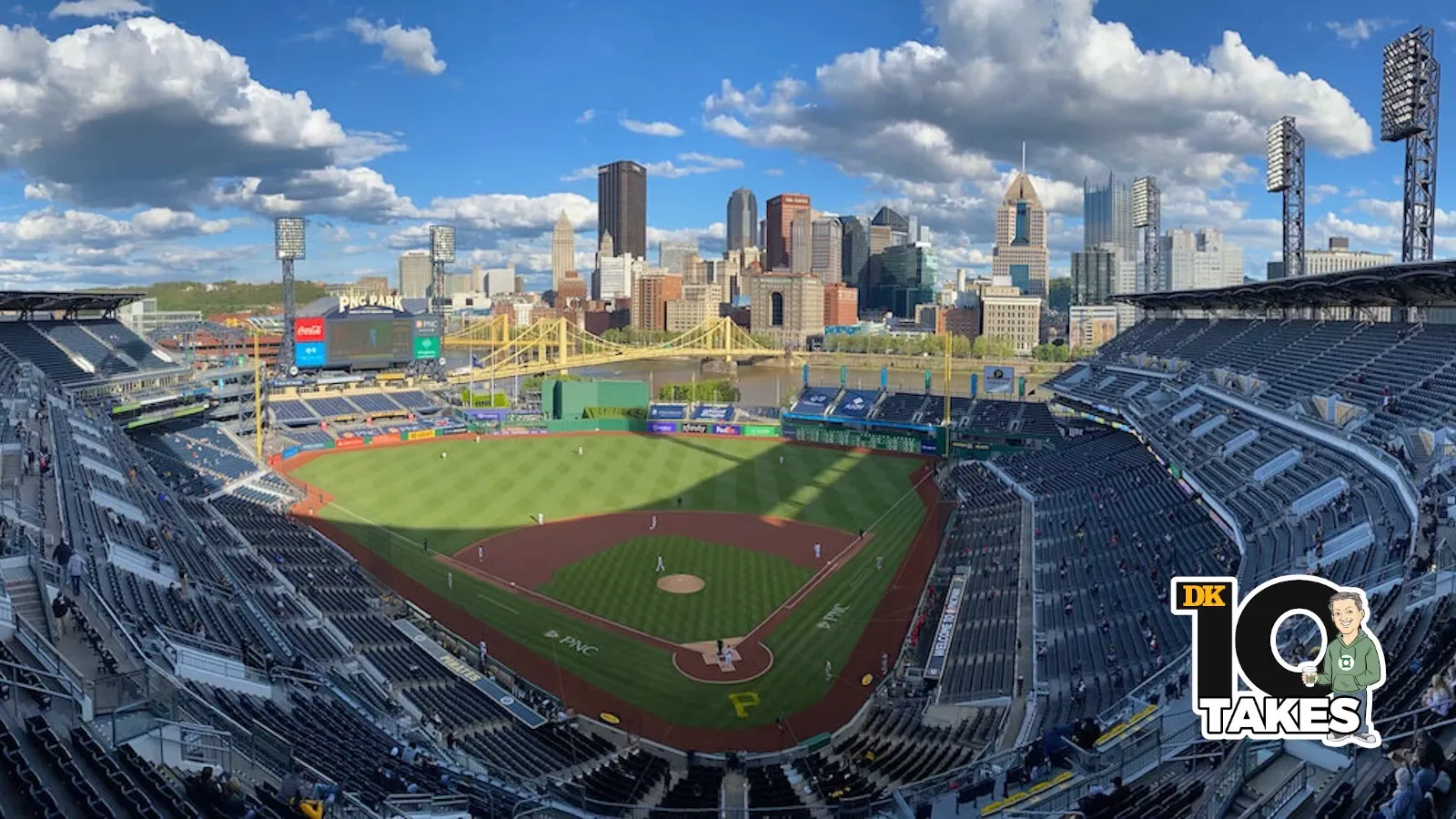
See that photo I snapped this past summer that's atop this column?
It can't look any more locked out than that, right?
Well, that's baseball in Pittsburgh these days. From Honus Wagner to Ralph Kiner to Roberto Clemente to Willie Stargell, from hosting the inaugural 1903 World Series to Bill Mazeroski hitting the greatest home run of all time to 13 total Hall of Famers to five total championships ... to that.
I don't care if it's Nutting's fault. I don't care whose fault it is. Not anymore.
Changing it should be the goal, here and everywhere it applies. And if that requires a unending, ugly shutdown that wounds those in New York and Los Angeles who can't wait to have their isolated fun again, so be it. This was never meant to be just their pastime.